
Management of Deep Vein Thrombosis The Ayurvedic Singapore Way
October 19, 2022 Management of Deep Vein Thrombosis The Ayurvedic Singapore Way Contact Us +65 6398 0415 admin@ayurvedasg.com Recent Articles Deep Vein Thrombosis, also known as DVT, is characterized by the development of blood clots in the deep veins, which can be a severe threat to life, says an expert at Ayurvedic Singapore. DVT occurs mainly in the lower limbs. But other deep or superficial veins might as well get affected. When the thrombus breaks and starts obstructing the small vessels of vital organs like the brain, heart, and lungs, it becomes a severe condition, adds the Ayurvedic Singapore expert. According to the expert at Ayurvedic Singapore, if a blood clot is formed without apparent reasons, it can be a DVT. The same can manifest as superficial leg or arm pain causing superficial thrombophlebitis, a disorder in which the formation of blood clots and inflammation of the vein occurs. It is the squeezing action of affected muscles to dissolve the thrombus in a DV. The expert at Ayurvedic Singapore says that DVT, in particular, is noticed after surgery or trauma, with higher levels of estrogen, contraceptive pills, during pregnancy, obesity, genetic factors, and in some blood disorders. Symptoms The expert at Ayurvedic Singapore details the symptoms. “The key symptoms seen in Deep Vein Thrombosis include pulmonary embolism (mostly with no signs, but chest pain may be caused by pulmonary embolism), edema (DVT blocks the blood flow in the large vein which may cause edema in legs), swelling and pain (the affected muscles become swollen and painful) and skin colour (skin becomes reddish brown). The expert at Ayurvedic Singapore says that the common investigations for Deep Vein Thrombosis are being done by the following methods: Colour doppler ultrasonography and CT scan by a radioactive marker. Ayurvedic Take According to the Ayurveda Singapore expert, Deep Vein Thrombosis symptoms are linked with Siragrandhi and Vatharaktham. Ayurveda considers that it is caused due to the imbalance in Vata, pitta doshas, and raktha datu. The treatment combines internal medicines and external therapies, including lepanam, abhyangam, medicated dhara, leech therapy, virechana, and vasthi, says the expert at Ayurveda Singapore. As a follow-up, the patient has to stay for at least three weeks of in-patient treatment. The patient will have to continue medicines for 2-3 months. However, those with acute symptoms should immediately approach an allopathic doctor. The Ayurvedic diet offers herbs such as garlic, ginger, and turmeric in your diet, which have potent anti-inflammatory, blood thinning, and anti-microbial activities. Also, you need to avoid too sour, salty, oily, and fried food items. It is also recommended to consume plenty of water. Activities About the activities a patient of Deep Vein Thrombosis can indulge in, the expert at Ayurveda Singapore recommends regular exercise to improve proper blood circulation and the health of blood vessels. In addition, the patient should avoid long periods of inactivity. For instance, while traveling for long hours, you need to stretch your legs and try walking for a few minutes. Bedridden patients should also do regular stretch exercises. Furthermore, wearing elastic stockings will further help in maintaining excellent blood flow. It is also recommended to raise your leg while sleeping with the help of a pillow or pillows.
Ayurveda Singapore Lists Out The Herbs To Control Blood Sugar Levels

October 19, 2022 Ayurveda Singapore Lists Out The Herbs To Control Blood Sugar Levels Contact Us +65 6398 0415 admin@ayurvedasg.com Recent Articles When you think of lifestyle-related diseases, the first one that comes to mind is diabetes. An expert from Ayurvedic Singapore says that diabetes is no longer an uncommon disease, especially the blood sugar variations, mainly due to sedentary lifestyles. Unlike the Allopathic treatment, Ayurveda management has no side effects whatsoever. According to the expert at Ayurvedic Singapore, one in ten persons suffers from high blood sugar levels due to the imbalance generated in the insulin hormonal secretion. She terms high/low blood sugar levels as a disruption in Vata formation. Here are some homegrown remedies or herbs that could reduce blood sugar levels. The expert at Ayurveda Singapore discusses the Ayurvedic herbs that would balance the Vata Dosha and blood sugar levels. Neem is a common leaf used in Ayurvedic treatments, as it has high-quality antibacterial agents. Neem also has anti-fungal properties, anti-microbial functionalities, blood purifying, and spermicidal properties. For diabetic patients, Neem helps stimulate blood glucose levels, thus improving insulin production in beta cells. As per the expert at Ayurveda Singapore, the Neem leaf extracts and its seeds help distribute sugar in the body to provide energy. The expert at Ayurvedic Singapore then moves on to Cinnamon, a key ingredient used as an Ayurvedic herb, especially for treating Type-II diabetes. Casa Cinnamon is the purest form of its kind, and it has a special quality of stimulating insulin activity and thus regulating the blood sugar level, adds the expert. Bitter gourd juice is another great option for controlling blood sugar levels. Known by different names worldwide, such as bitter melon or Karela in Hindi, African cucumber, balsam apple, ampalaya, or pavaikka in Tamil or kaipakka in Malayalam, it goes on with different names. Still, one that remains the same no matter which country it grows in is its exceptional contribution to the management of diabetes, says the expert at Ayurvedic Singapore. As the expert at Ayurveda Singapore puts it, Bitter gourd has various nutrients and minerals in addition to Polypeptide-p, Vicine, and Charatin – compounds potential enough to mimic the human insulin and balances the blood sugar level. Moreover, another molecule called momordin helps regulate fatty acids and glucose metabolism, which again plays a pivotal role in curing diabetes, as per the expert. Mango leaves have many benefits for human health, says the expert at Ayurveda Singapore. In fact, in Ayurvedic Singapore parlance, mango leaves are the key ingredient for treating diabetes. The mango leaves contain molecules and compounds that stimulate insulin in the human body and balance hormonal secretion. Furthermore, Ayurveda binds all four Vatas together, which contributes to a healthy circulation of human bodily activities without any side effects.
Ayurvedic Singapore on the treatment For High Uric Acid
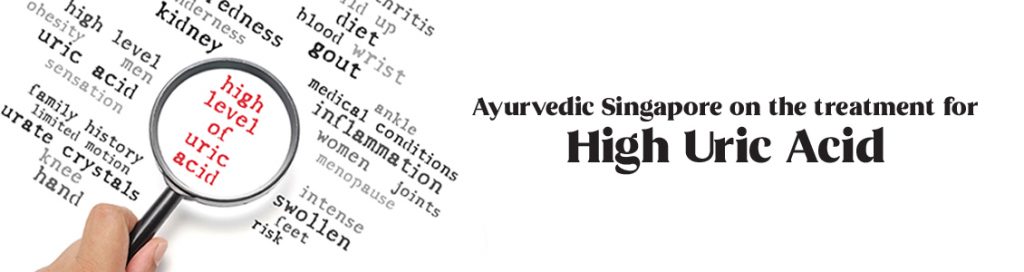
September 26, 2022 Ayurvedic Singapore on the treatment For High Uric Acid Contact Us +65 6398 0415 admin@ayurvedasg.com Recent Articles The cause of high uric acid is the disorder in the Vata Raktha Dosha or Vayu Blood Dosha. Expert at Ayurvedic Singapore says that uric acid is produced excessively due to the intake of non-vegetarian protein food and alcohol. Improper diet exacerbates the excess production of uric acid, says the expert at Ayurvedic Singapore. Also, if you eat more acidic, oily, spicy, and sour food and take less fiber, it can cause excess production of uric acid in your body. Meat, eggs, tea, coffee, curd, alcohol, and pulses do not digest easily, in contrast with fruits and vegetables that are rich in fibre. Toxicity may occur in the blood, triggering sensations such as burning, redness, pain, inflammation, and swelling in the joints. Causes & Symptoms Expert at Ayurvedic Singapore says there are several causes and symptoms of excess uric acid. The reasons include obesity, indigestion, stress, hormonal imbalance, and diabetes. Genetics,too, is beleived to play a crucial role in excess uric acid in the human body. Other factors include high alcohol consumption, red meat, anger, junk and fried food consumption, and the accumulation of toxins in the body. According to the expert at Ayurvedic Singapore, the signs or symptoms related to a high uric acid level include severe swelling and pain around the joints, redness and stiffness in the joints, nausea, lower back pain, and pain during urination. Treatment Increased uric acid also leads to painful joints condition, known as gout, in addition to causing kidney issues. Of course, you can control high levels of uric acid through Ayurvedic medicines. According to the expert at Ayurveda Singapore, the effective Ayurvedic treatment for high uric acid is to streamline your diet. Therefore, you must avoid consuming food products that are difficult to digest in your body. Expert at Ayurveda Singapore says that Asthanidi Peya, Liquorice, and Punarnava effectively treat the uric acid disorder. Ashtanidhi Peya is a mixture of different herbs like Giloy, Arjuna Bark, Dry Lotus Flowers, Gokru, and Kutki. This brings uric acid to a permissible level As Liquorice has anti-inflammatory properties, it will control swelling and pain quite effectively. The experts at Ayurveda Singapore advise patients to regularly consume this herb for forty days on an empty stomach. Punarnava (pure extract) helps you in removing toxins from your body. Thanks to its anti-oxidant nature, Punarnava gives excellent results. According to the expert at Ayurveda Singapore, among fruits, the banana is pretty good in terms of reducing the heightened level of uric acid in your body. Also, fruits rich in potassium and Vitamin C help reduce inflammation and uric acid. The expert at Ayurveda Singapore says, “ Food items such as mushrooms, peas, spinach, red meat, fish, tea, coffee, white bread, butter, curd/yogurt, milk, cheese, white rice, and beverages with sugar content are known to trigger excessive uric acid in the body. Hence, you must avoid these food items if you have this issue.
Ayurvedic Singapore expert talks about managing asthma

September 26, 2022 Ayurvedic Singapore expert talks about managing asthma Contact Us +65 6398 0415 admin@ayurvedasg.com Recent Articles Asthma, a respiratory disease, is characterised by narrowing of the airways and is caused due to the excessive intake of Vata (cold), Kapha aggravating food items, weakening of the lung tissues, and issues caused by lung diseases, according to the expert at Ayurveda Singapore. Along with that, environmental lifestyle factors too play a role in asthma. Taking stale or cold foods that are hard to digest leads to the formation of ama (mucus), thereby triggering blockage in the respiratory channel and resulting in breathing difficulties. Also, living in cold and damp environs too is a reason for asthma. Choosing Ayurveda On why you should opt for Ayurveda to treat asthma, the expert at Ayurvedic Singapore says that in contrast with other treatment procedures which take a plunge into symptom management, Ayurveda has a cohesive focus on finding and addressing the root cause of the disease. Initially, Ayurveda begins the procedure by detoxifying the body to make sure that the medicines worked better to treat the actual root cause of the disease. Secondly, Ayurveda lays emphasis on diet and lifestyle other than medicines, which complements the effect of medicines, besides sustaining the benefit of treatment after medicines have ended. The third aspect is that by having a cohesive focus on the root cause of the disease, Ayurveda effectively reduces the risk of chronic health issues borne out of the untreated underlying cause, says the expert at Ayurvedic Singapore. Asthma There are two types of asthma: bronchial and allergic. At first, Ayurveda focuses on reducing localised inflammations, cleansing and strengthening pranavaha strotas, and balancing aggravated doshas, says the expert at Ayurvedic Singapore. Apart from herbal medicines, Panchakarma therapies, including oiling and swedana or sudation, are recommended. In terms of allergic asthma, treatment works towards strengthening the immune system, in addition to the cleansing of toxins from the respiratory channels, thus reducing hypersensitivity to allergens, says the expert. What’s more, Panchakarma therapies are recommended for allergic asthma as well. Home Remedies Let’s see how these easy-to-source and make home remedies can save you from the potential attack of asthma. Ginger and Garlic: Ginger and garlic are common ingredients we use in many of our dishes almost on a daily basis. If any member of your family is suffering from asthma, you can consider making ginger tea, says the expert at Ayurvedic Singapore. Ginger helps heal inflammation. Make half a cup of ginger tea and mix it with 2-3 crushed garlic cloves. This is a very effective remedy in terms of releasing the Kapha accumulation in the airways and eventually preventing asthmatic attacks. Ginger and Turmeric: Another combination is ginger turmeric tea. Grate the ginger afresh and boil it along with a glass of milk and half a teaspoon of turmeric powder. According to the expert at Ayurvedic Singapore, if this drink is consumed twice a day, it helps a lot in terms of reducing the frequency of asthma attacks, says the expert at Ayurveda Singapore. Cinnamon and Honey: The expert at Ayurveda Singapore suggests boiling a cup of water and adding one teaspoon of cinnamon and 1/4 teaspoon of trikatu. Mix it nicely and keep it for ten minutes to settle. Furthermore, add one teaspoon of honey, and then you can have it twice a day which will help you to prevent the possible asthma attack. Licorice and Ginger: Otherwise known as mulethi (Hindi), Licorice is replete with anti-inflammatory properties. Consuming a tea made with half a teaspoon each of Licorice and ginger daily will help in keeping asthma at bay, says the expert from Ayurvedic Singapore. Bay Leaf: Take half a teaspoon of bay leaf and 1.4 teaspoons of pippali along with one teaspoon of honey and have it thrice a day to contain chronic symptoms of asthma, adds the expert at Ayurvedic Singapore.
Ayurvedic Singapore on treating inflammation in a natural way
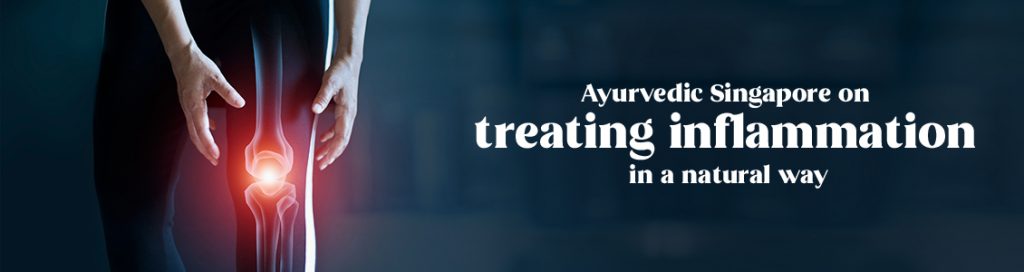
September 26, 2022 Ayurvedic Singapore on treating inflammation in a natural way Contact Us +65 6398 0415 admin@ayurvedasg.com Recent Articles Inflammation and pain are a nightmare for human beings. Though modern medicine offers a quick remedy, the relief you get is not without side effects. Ayurvedic approach to inflammation and pain management is very holistic, sans any side effects, says an expert at Ayurvedic Singapore. When it comes to inflammation and pain treatment, we should have an integrated approach in place and look beyond the outward ache or pain to probe the inner or underlying source which causes such inflammation and pain, says the expert at Ayurveda Singapore. According to the official, often, chronic pain is caused by an inflammatory response internally. What better treatment can you look forward to other than relying on Ayurvedic herbal treatments, which are effective in healing and controlling excess inflammation and gaining long-term results? According to the expert at Ayurveda Singapore, such treatments must be part of an integrative approach with a combination of dietary changes, detoxification, and therapeutic exercise. To put it in a nutshell, says the expert at Ayurvedic Singapore, inflammation is nothing but the body’s normal response to conditions like infection, toxins, and trauma. Under normal conditions, once the damaging episode gets over, the body will automatically produce an anti-inflammatory response to restore balance. According to an Ayurvedic Singapore expert, the body fails to regulate the inflammatory response in severe pain, resulting in chronic imbalance and intense pain. Ayurvedic Herbs While throwing light on the Ayurvedic herbs that help address ongoing excess inflammation, the expert at Ayurvedic Singapore says that among these is Boswellia serrata, which has been proven in clinical studies that ease the pain of osteoarthritis. Also known as Indian frankincense or olibanum, it is made from the resin of the Boswellia serrata tree, better known for its familiar spicy and woody aroma. The expert at Ayurvedic Singapore says that many studies have proven that Boswellia might be very effective in reducing inflammation by preventing the release of inflammation-causing compounds, leukotrienes. The expert at Ayurvedic Singapore adds that Triphala, an Ayurvedic remedy, consists of three small medicinal fruits: amla or Indian gooseberry, bibhitaki, and harigaki. Clinical studies have proved that Triphala reduces inflammation caused by arthritis and restricts the growth of certain types of cancer. It also functions as a natural laxative, thus reducing constipation, abdominal pain, and flatulence while improving the consistency and frequency of bowel movements in those with gut disorders. The expert at Ayurvedic Singapore says that in addition to that, a range of herbs, including the prized spice Curcuma longa, Zingiber officinale, known in Ayurvedic parlance as ‘universal medication,’ and Withania somnifera, which is a powerful herb. Either taking it alone or in combination with other herbs, these natural pain relievers treats chronic inflammation sans any serious contra-indications or side effects. The expert at Ayurvedic Singapore concludes by saying that Ayurveda’s comprehensive and holistic approach offers a wholesome solution for chronic pain sufferers. Along with gentle exercise regimens, nutritional therapies, and detoxification, in addition to the wonder mentioned above, Ayurvedic herbs will undoubtedly provide a lifestyle makeover that might offer the sufferer a healthy and pain-free life.
Ayurvedic Singapore Explains Types of Male Sexual Conditions
September 19, 2022 Ayurvedic Singapore Explains Types of Male Sexual Conditions Contact Us +65 6398 0415 admin@ayurvedasg.com Recent Articles Medical sciences have analyzed male sexual health conditions in general. But the research conducted by Ayurvedic Singapore, in particular, found the causes for certain male sexual conditions, and they offer solutions according to the Ayurvedic ways. Speaking about the male sexual health conditions, an expert at Ayurveda Singapore classifies Claibya or sexual dysfunction (erectile dysfunction or ED) into four types: ED can be caused due to ageing process, undernourishment, trauma to reproductive tissues, and reduced shukra dhatu. Oldage ED Quoting Acharya Charaka, the expert at Ayurvedic Singapore, describes Jaraja Claibya or ED in an elaborate way: “As men grow old, the male hormone called testosterone levels decreases, triggering a slew of conditions including obesity, depression, loss of sensitivity of nerves (more particularly in the male genital organ – penis), atrophy of penile muscles, shrinkage of testicles, low energy level and loss of stamina and concentration.’ The expert at Ayurvedic Singapore adds, “Low testosterone-related metabolic disturbances lead to type 2 diabetes, high levels of cholesterol in the blood, heart and vascular diseases. A combination of these factors, in turn, will lead to the loss of male libido and ED.” Kshayaja Klaibya The Ayurvedic texts term the fourth type of impotence as ‘Kshayaja Klaiba.’ This type of ED is due to the reduction in the quality and quantity of semen. According to the expert at Ayurvedic Singapore, there is a range of factors that harm semen quality and quantity, such as constant undue worry just about everything, repeated experience of grief, uncontrolled anger, anxiety and stress, fear of confronting issues; alcohol addiction, marijuana, and other drugs; junk food and repeated fasting when the body is undernourished. These factors will obviously reduce both the quantity and quality of rasa dhatu. Rasa Dhathu It is the first dhatu that is formed when food is digested, and Rasa Dhathu is replete with immense nutrients, says the expert at Ayurvedic Singapore. The successive dhatus such as Rakta Dhathu (Blood), Mamsa (Muscle Tissue), Medha (Body Fat), Asthi (Bones or Skeletal System), Majja (Bone Marrow), and Shukra get nutrients from rasa dhatu. In fact, the Shukra Dhathu is the last tissue to get nourished, says the expert at Ayurvedic Singapore. Obviously, when the quality of Rasa Dhathu is poor, the nourishment that reaches Shukra Dhathu too will be poor. Eventually, the quantity and quality of Shukra Dhathu will be reduced, which will lead to Claibya or ED. Dhvajabhangaja Klaibya Men experience Dhvajabangaja Klaibya, when tissues of the male reproductive system degenerate or experience trauma, says the expert at Ayurvedic Singapore. Several causes, such as chronic diseases, hunger, trauma to penile tissues, and more, can cause this type of ED in young men. Citing Ayurveda texts, the expert at Ayurvedic Singapore says that the injury to the penis may cause ED. The injury could be due to trauma, infections, chronic diseases, or simply an imbalance of tridosha; when there is a failure to achieve a regular supply of blood to the penis, ED sets in. The reasons for this type of ED include chronic diseases such as tuberculosis, which cause emaciation and, in turn, might as well damage male sexual function. Other reasons are trauma during intercourse, trauma to the pelvic region, prolonged bicycle riding, etc.
Increasing Ojas or Vigour the Ayurveda Singapore Way

September 19, 2022 Increasing Ojas or Vigour the Ayurveda Singapore Way Contact Us +65 6398 0415 admin@ayurvedasg.com Recent Articles In the Ayurveda branch of medical science, the term Ojas means vigour. The expert at Ayurveda Singapore says that the vital energy or essence nourishes all tissues and is responsible for the proper functioning of our body, mind, and spirit. Ojas is nothing but the reference to the energy reserve of cerebrospinal, hormonal, and reproductive fluids, says the expert at Ayurveda Singapore. Elucidating Ojas, the expert at Ayurveda Singapore, says that it refers to the energy reserve of hormonal, cerebrospinal, and reproductive fluids. For instance, when you are in a gym, lifting weights, at that time, your physical energy is at work. Having said that, it is Ojas that determines your drive to visit the gym daily, and despite your heavy workout sessions, you feel pretty energetic. This innate enthusiasm and subtle force motivate you further to exert and reach more milestones, whatever the circumstances. Stating that low energy levels don’t always mean low Ojas, the Ayurveda Singapore expert states that low Ojas might as well lead to low energy levels. Unlike the temporary bouts of energy you get from caffeine or eating sugar-rich foods, Ojas is sustainable energy. Ojas energy, in turn, builds up with time as you follow a healthy lifestyle and stay confined to a plant-based diet. In Ayurvedic terminology, Ojas is considered the purest essence of Kapha and is also conceived as the body’s natural elixir that provides strength and vigour from within. Weak Ojas According to the expert at Ayurveda Singapore, often, the weak Ojas might impair your ability to perform both mentally and physically, which in turn, breeds discontentment and despair. Often, weak Ojas triggers restlessness within you and impair your decision-making ability. Thanks to our youth’s sedentary lifestyles, weak Ojas is common amongst them. Immunity It is a given thing that Ojas is a vital energy that influences the body’s immune system. Experts at Ayurveda Singapore says, “Weak Ojas impacts your immunity and keeps your spirits low. Over time, the signs of weak Ojas become pronounced, including dull and dry skin, pale complexion, low energy levels, and poor mental and emotional clarity.” Expert at Ayurveda Singapore adds, “There may also be musculoskeletal pains, especially in the calves and back, and high sensitivity to sound and light. They are more vulnerable to seasonal flu and other ailments and last, but not the least, the experience inability to focus, negative fixations and anxiety.” According to the expert at Ayurveda Singapore, if you have any combination of the signs mentioned above sans any underlying condition, it is an indication that you may have weak Ojas and low immunity. Although you might not be clinically sick, weak Ojas may lead to a similar situation. Worse still is the situation where you don’t even realise that you need assistance. However, if you have weak Ojas, you don’t have to conclude that doomsday has arrived. Ayurveda Singapore recommends a gamut of Ojas building food such as almonds, bananas, avocado, sweet potato, yams, dates, and tofu to revive your sustainable energy. If you follow them, you might get back to leading a healthy and active life.
Ayurveda Singapore Busts Weight Loss Myths

September 16, 2022 Ayurveda Singapore Busts Weight Loss Myths Contact Us +65 6398 0415 admin@ayurvedasg.com Recent Articles Many weight loss myths are making rounds, which are unfounded. Expert at Ayurveda Singapore bursts some of these myths. Let’s see some of the typical weight loss myths that are floating around and what the ground reality is. Myth number one is that ‘the more weight you have to reduce, you need more workout movements.’ Do you think this contention is correct? Wrong! Says the expert at Ayurvedic Singapore. Although the idea of practicing excessive exercise movements is excellent, you also have to consider some factors. Excessive or intense exercise means different things to different people. For instance, if a person has not undertaken any exercise for eons and if that person runs a couple of miles out of the blue, they may sweat heavily. In contrast, if a person who has been active and goes for exercise regularly and runs just the exact two miles, the perspiration level will be less. So, the intensity does not matter. For losing weight, what matters is time, says the expert at Ayurvedic Singapore. While undertaking exercise, rather than working on intensity, you need to focus on the time you give for exercise. Myth number two, stress and weight loss will never go hand in hand. In fact, stress has a direct correlation with body weight, period. The expert at Ayurveda Singapore says that stress may increase weight in some individuals, and it may decrease as well for others. The third myth is that ‘Eat whatever you want to lose weight.’ this is undoubtedly the chartbuster amongst funny myths. Eating chips, donuts, twinkies, and more and wishing to lose weight is illogical, says the expert at Ayurvedic Singapore. Being healthy is not judged by the mere look of it the exterior. Instead, you have to be healthy from within. Regular physical activity and a balanced and healthy diet are important for reducing weight. The fourth myth is that skipping meals will help reduce weight. Rubbishing the myth, the expert at Ayurvedic Singapore says that those who skip breakfast are seen to be gaining weight faster than those who have regular breakfast in the morning. Explaining the rationale, the expert at Ayurvedic Singapore further adds that when one skips breakfast, they may feel more hungry throughout the day. They end up eating more than the one who takes a proper meal with a two-hour gap. And that is why these people do not gain weight compared to those who skip meals. So, the advice from the expert is not to skip meals at all and, in turn, to eat frequent small meals to avoid faster weight gain. The sixth myth is that decreasing the intake of calories will help you lose weight. Well, the expert at Ayurveda Singapore says that reducing energy intake is undoubtedly extraordinary if someone is stuffing and significantly overeating. Instead, if one eats proportionally rather than reducing the intake of calories, it is likely to have an adverse effect. Suppose you are reducing energy intake and starving; this would eventually affect your metabolism. Therefore, you can’t reduce weight by cutting down the calories, concludes the expert at Ayurvedic Singapore.
Ayurveda Singapore Offers Tips for Relieving Constipation

September 13, 2022 Ayurveda Singapore Offers Tips for Relieving Constipation Contact Us +65 6398 0415 admin@ayurvedasg.com Recent Articles People of all ages can get affected by constipation. It is a digestive disorder that is characterized by restricted bowel movements (read motion), usually three or fewer times a week. Expert at Ayurveda Singapore offers some valuable tips to combat constipation. The inconvenience caused by constipation, according to the expert at Ayurveda Singapore, includes hard stools, the resultant difficulty, and the strain caused by the toilet seat. In a few cases, patients report that they experience intermittent symptoms wherein they had the sensation of the motion getting blocked, making them unable to empty their bowels. Severe or chronic constipation may result in stomach cramps, bloating, and rectal pain due to the excessive strain in emptying the bowel. The expert at Ayurveda Singapore says that constipation can cause nausea due to the build up of stool in the intestines. It makes food linger in the stomach for a long time, leading to nausea or bloating. A build up of stool can also cause an imbalance in the gut bacteria, causing nausea. Causes As per the expert at Ayurveda Singapore, constipation is the result of certain factors. If you experience persisting constipation, you must make the requisite lifestyle changes to overcome it. The leading causes include insufficient water level in your body, fiber deficit in your daily diet, lack of exercise and a sedentary lifestyle. Certain medicines, digestive issues such as bloating, frequent travelling, untimely intake of food, irregular sleeping patterns, and an underlying condition called lazy bowel syndrome are all reasons for constipation. It is not uncommon that pregnant women to experience constipation. Ayurvedic Solution Ayurveda Singapore recommends herbal digestive syrups for constipation, with Haritaki as the key ingredient. In addition to clearing up the digestive tract, the syrup also facilitates bowel movements. Moreover, the syrup also helps treat indigestion and bring down flatulence, bloating, and cramps. Ayurvedic Singapore also suggests medicine in tablet form for relief from constipation. Combining ingredients such as castor, ginger, haritaki, and other herbs will act as natural laxatives and help cleanse the colon. Triphala is another herb that is a panacea for constipation as it is an excellent laxative. Triphala also treats several gastric disorders. According to the expert at Ayurveda Singapore, consuming a spoon or two of coconut oil every day can help lubricate your intestines, which would eventually ease your bowel movements. Anjeer or figs are other excellent laxatives having a lot of fiber content. You need to soak Anjeer in warm water and consume it to get the desired result of improving digestion and preventing constipation. The expert at Ayurveda Singapore further says that if you aim at natural ways to get relief from constipation, then the best bet is to take liquorice root powder. All you have to do is lace this powder in lukewarm water and consume it, which will treat constipation and keep your digestive juices flowing. Adding ghee to your diet will also help as it is a natural laxative that cleanses your colon. The expert at Ayurveda Singapore concludes saying that one can warm 200 ML water and add a tablespoon of ghee. Drink the ghee water first in the morning, and it is expected to help ease your constipation.
Ayurvedic Singapore talks about the management of hemorrhoids

September 13, 2022 Ayurvedic Singapore talks about the management of hemorrhoids Contact Us +65 6398 0415 admin@ayurvedasg.com Recent Articles Piles or Hemorrhoids is a painful condition. Experts at Ayurveda Singapore term piles as swollen veins found in and around anus and rectum, affecting a patient internally and externally. Elaborating on the symptoms of piles, the expert at Ayurveda Singapore says that though there are many symptoms, the main symptoms include painful or itchy swelling in the form of a lump near the anus, along with painful bowel movements. In some cases, there will be bleeding from the anus during or after bowel movements are also seen. Other symptoms are irritation or pain or both around the anus and leakage of stool. When people see these symptoms, most people first rush to the nearest chemist’s outlet and rely on over-the-counter drugs to get immediate relief from pain. But severe hemorrhoids will require intense and elaborate treatment, says the expert at Ayurveda Singapore. Ayurveda offers effective treatment without any side effects, says the expert at Ayurveda Singapore. Identifying the Dosha In the Ayurvedic school of thought, the dominant dosha in a patient’s body determines the type of piles or hemorrhoids they might be afflicted with. Shedding light on the same, the Ayurvedic Singapore expert says that those with pitta body tend to experience inflamed, bleeding piles that are soft and red. The expert says that fever, diarrhea, and intense thirst are other symptoms. According to the expert at Ayurveda Singapore, those with Vata dosha might also experience intense pain, constipation, and dark hemorrhoids with a rough, hard texture. Those with Kapha may have poor digestion, while their hemorrhoids would be slippery, light or white, soft and large. Remedies Ayurveda Singaporeexpert says their approach towards piles or hemorrhoids is more holistic. The expert says that patients experiencing piles or hemorrhoids who want to try out Ayurveda treatment should be prepared to accept herbal remedies and lifestyle changes. After determining your dosha, Ayurvedic practitioners will suggest the treatment. Ayurveda Singaporeexpert says that in Ayurveda, the herbal application or kshara is good for piles or hemorrhoids. Kshara is nothing but a caustic alkaline paste made of a herbal blend that has a cauterizing action, says the expert at Ayurveda Singapore. Using a slit proctoscope, kshara is applied to hemorrhoid. Home Remedies The expert at Ayurveda Singapore suggests a few home remedies for piles or hemorrhoids. A warm bath with Epsom salt, cold compresses, witch hazel, aloe vera gel, moistened wipes, wearing loose cotton clothing, tea tree oil, and coconut oil are the few options you have for getting relief from piles or hemorrhoids. You should consult an Ayurvedic expert in your region to identify the kind of dosha you have and decide on the treatment per the advice. Using natural ingredients prescribed by Ayurveda Singapore can reduce rectal bleeding, inflammation, and swelling. Ayurvedic management of piles can relieve pain and itching and improve easy bowel emptying.