
WHEN TO CONSULT AN AYURVEDIC PHYSICIAN

March 30, 2022 WHEN TO CONSULT AN AYURVEDIC PHYSICIAN Contact Us +65 6398 0415 admin@ayurvedasg.com Recent Articles Today, many people have gotten into the habit of searching the internet for solutions to their health issues. From fatigue to headaches and cancer, people seek knowledge on the internet. However, internet knowledge can be a bane when it comes to healthcare. With half-understood details and self-medication based on symptoms, you may be putting your health in severe conditions So, here we give you some tips as to when and why you should visit an Ayurvedic practitioner. To assess your dosha and manage it effectively: Often people take some online quizzes and try to determine the dosha aspect of their body. In most cases, you may be more confused as such quizzes won’t be able to capture a clear picture. Also, taking any medication based on such quizzes can be harmful. The only way to assess your body dosha type is to visit an Ayurvedic practitioner. Using pulse, they assess dosha based on several questions, observations, and diagnoses. An Ayurvedic practitioner can give you a precise diagnosis of your current state of health and imbalances. Working with an Ayurvedic practitioner will help you travel on the right path of health. When you have some skin issue that’s persistent for some time or a chronic illness, it’s best to consult an Ayurvedic practitioner. Ayurveda addresses the root of the problems and prescribes its management using diet, lifestyle, and medication. Today, work and lifestyle are pretty demanding on the mind and body. To sustain the energy levels and stay on top of your health, Ayurveda has time-tested methods. Consulting an Ayurvedic practitioner helps you stay fit and energetic. An Ayurvedic practitioner conducts the examinations in three parts: Darshan or observation: An Ayurvedic practitioner assesses the person’s health by looking at the patient and observing their movements, skin color, eyes, lines on the face, nose shape, body contour, quality of hair, nails, and lips. Sparsha or touch: An Ayurvedic practitioner will use touch, press down on parts of the body, listen for sounds made by the internal organs, and tap on some parts. The ayurvedic practitioner applies focus on the patient’s pulse, speech, tongue, and nails. Prashna or questions: Ayurvedic practitioner will check with the patient about the symptoms, complaints, duration of the problem, and disease progression. The practitioner also will check the mental and psychological condition of the patient. The comprehensive examination helps an Ayurvedic practitioner diagnose the disorder and customize the management for each patient. For the diagnosis, the Ayurvedic practitioner employs rogi-roga pareeksha. This method combines disease analysis with a deep examination of individuals. Ayurveda considers that human beings have the energy to bring the body back to a healthy or balanced state. Hence, instead of focusing on treatment or medicine to manage the illness, the Ayurvedic practitioner focuses on the techniques to strengthen the healthy elements inherent in the body, which will help the individual to recover. This principle is called svabhavoparamavada, which means the Ayurvedic idea of helping the body urge its energy to heal. While treatments and medicines are used in the process, it is only to support the body’s self-reparation.
NEEM, A PANACEA IN AYURVEDA
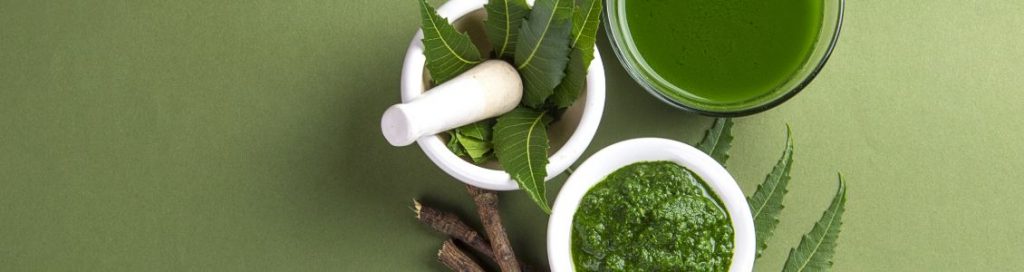
March 29, 2022 NEEM, A PANACEA IN AYURVEDA Contact Us +65 6398 0415 admin@ayurvedasg.com Recent Articles Neem is a popular herb used in traditional remedies from time immemorial. It’s known as Neemba in Sanskrit. Neem is considered to be cooling in nature, and it’s often suggested to balance the Pitta dosha. Neem is used in detoxification. However, neem is said to increase Vata, and hence it’s often advised in combination with other herbs. Uses of neem Neem is used in a wide range of diseases. It is said to purify blood and is considered a good antibacterial, antiviral, and anthelmintic. Neem can be used in lepa, kashaya or as powder. Neem powder mixed with other herbs can be made into a paste with water or honey. It can be used over the skin as a paste. Neem powder with hot water can be used in bathing. Neem water decoction or kashaya can wash infections of the eyes and even piles. Neem oil is used to manage skin diseases and hair issues. Neem twig is used as a toothbrush. There are numerous benefits and uses of neem leaves. Treats acne Neem is anti-inflammatory, and it helps reduce acne and skin blemishes. It is a great source of vitamin E, and it helps repair damaged skin cells. It has antifungal properties and is hence used to manage fungal infections. Neem is used both internally and externally for detoxification. Neem plays a significant role in boosting immunity. Neem is widely used as an insect and mosquito repellent. To ward off insects, you can burn a few neem leaves. Reduces dandruff Neem is an essential ingredient in shampoos and conditioners. It has antifungal and antibacterial properties, which are good to eliminate dandruff and scalp infections. Neem is used to eliminate lice, too. Relieves pain The application of neem oil helps reduce pain, and hence arthritis patients use it to reduce pain and discomfort. Neem is quite a versatile plant. Each and every part of neem tree can be of use to mankind-be it the leaves, bark, oil, flowers, or seeds. Tender leaves and flowers of neem are used in pachadis and rasam, and in many cultures, it is customary to add the pachadi to the lunch. Here are some home remedies using neem Make a paste of neem leaves and dab it on the wound or insect bites. It helps heal faster. To get rid of dandruff, boil many neem leaves till the water turns green and allow it to cool. After shampooing, cleanse the hair with neem water. You can boil neem leaves and use cooled water to wash your face and eyes to avoid eye irritation. Neem is an excellent exfoliant, and you can use neem powder to get glowing skin. To manage acne, dark spots, and blemishes, make a paste of neem leaves and apply it. Allow it to dry and wash off. Consult a physician However, neem should not be consumed daily. You should consult an Ayurvedic physician before consuming neem. Neem can reduce blood sugar drastically and hence if you are fasting or on some medication, you need to take care to be taken not to eat neem.
BALANCE YOUR GUT HEALTH WITH AYURVEDA

March 14, 2022 BALANCE YOUR GUT HEALTH WITH AYURVEDA Contact Us +65 6398 0415 admin@ayurvedasg.com Recent Articles Our digestive system is a complex part of the body. It extends from the mouth to the rectum. The digestive system helps the body absorb nutrients and eliminate waste. Our gut is central to our general health, and it is linked to the immune system, endocrine diseases, mood, mental health, skin conditions, and so on. The digestive system comprises of the gastrointestinal tract or the GI tract, pancreas, liver, and gallbladder. The GI tract is like a twisted tube from the mouth to the rectum. The mouth, esophagus, stomach, small and large intestine, and anus are hollow organs that are part of the GI tract. The liver, pancreas, and gallbladder are said to be the solid organs of the digestive system. It is likely that all living beings have had digestive problems on and off. The common symptoms of digestive issues are stomach ache, constipation or diarrhoea, heartburn, and indigestion. Food, lifestyle, and stress are considered major contributors to digestive problems. Certain medicines can also lead to an upset tummy and cause diarrhoea or constipation. While medicines used in arthritis can cause acidity and even peptic ulcer, iron tablet, cough medicines, and painkillers can cause constipation or diarrhoea in some people. Ayurveda describes digestion as Agni or digestive fire, and it is considered a critical aspect of health. According to Ayurveda, when Agni is compromised, toxins or ama will start accumulating and block the nutrient’s flow and start giving an illness. Ayurveda mentions that all the three doshas, Vata, Pitta, and Kapha are characterized by a particular Agni type. Irregular digestion: Vata-type people often have an easily compromised digestive fire. They often suffer from gas and constipation. Ayurveda prescribes to take soft, warm, and liquid food with good fat. It also suggests avoiding cold, rough, raw, and crunchy food items. Vata people should eat slowly and at a relaxed pace. Including spices like ginger, cinnamon, cardamom, fennel, and ajwain will be helpful. Quick digestion: Pitta dosha aggravates hunger. Such type people will often take large quantities of food and more frequently. It’s due to the excessive and hot digestive fire. The digestive fire burns up the nutrients in the food, and people may feel hungry all the time. They often suffer from acidity and diarrhoea. Those having Pitta dosha should avoid excess salt in food. They should stay away from oily, spicy, and sour food. Bitter and astringent tastes are good for them, and they should include a lot of cooked vegetables in the diet. While slow eating is important, they should relax after consuming food. Spices like coriander, fennel, cilantro, and cumin are good for Pitta dosha due to their cooling effect. Sluggish digestion: People with Kapha dosha have a wet and cold digestive fire. They will not feel hungry in the morning but will prefer eating later in the day and at night. Kapha dosha gives rise to bloating and slow metabolism. Such people should take cooked vegetables and fresh foods. Ginger tea is good for them, and they should try to get fresh air and do exercise regularly. To balance the type, they can eat a sumptuous lunch and lite and early dinner. Kapha-type people can include spices like turmeric, cloves, fenugreek, and black pepper in their diet. Though considered harmless, sometimes, the symptoms of digestive issues may be a sign of serious illness. A change in the pattern of your bowel movement, bleeding, unexpected weight loss, persistent indigestion, and difficulty in swallowing may need a consultation with a physician.
AYURVEDA FOR HYPOTHYROIDISM
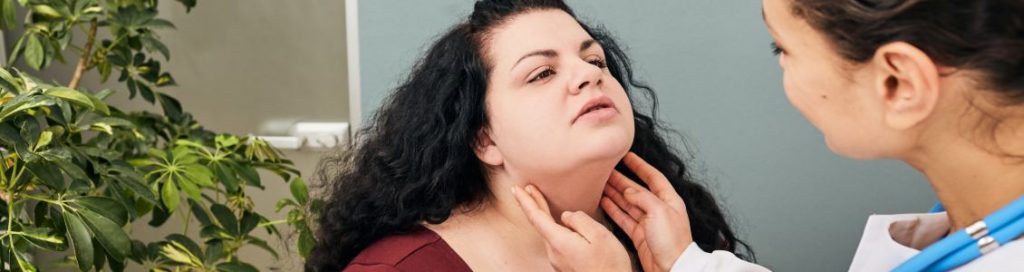
March 14, 2022 AYURVEDA FOR HYPOTHYROIDISM Contact Us +65 6398 0415 admin@ayurvedasg.com Recent Articles The thyroid hormone manages metabolism, growth, and other bodily functions. The major hormones produced by the thyroid gland are thyroxine or tetraiodothyronine (T4) and triiodothyronine (T3). Excess and reduced secretion of thyroid hormones can play havoc with a person’s bodily functions. Hypothyroidism is caused by an underactive thyroid gland. Bradycardia, intolerance to cold, fatigue, weight gain, and constipation may be indications of an underactive thyroid. Hyperthyroidism occurs when the thyroid gland function is in excess, and it may manifest as weight loss, muscle weakness, heat intolerance, and diarrhea. Symptoms of Hypothyroidism Researchers say that women are five to eight times more likely to face thyroid problems than men. One woman in eight is said to develop a thyroid disorder during her lifetime. However, nearly 60 percent of people with thyroid disease are unaware of their condition. Depressed feeling Constipation Fatigue and weakness Puffy face, eyes, and eyelids Reduced density of eyebrows Increased hair growth on lower legs Reduced heart rate while at rest (comes under 65) Swollen legs and ankles Cracked heels Dry and rough skin Sudden weight gain, which is hard to lose Ayurveda identifies an underactive thyroid as a Kapha condition. Kapha is characterized by heaviness and slowness and hypothyroidism, too, exhibits similar signs. Slow metabolism, otherwise known as manda agni is found in individuals with Kapha dosha and imbalance. Apart from autoimmune conditions, radiation or surgery and stress can also cause hypothyroidism. Stress causes an imbalance of doshas (Vata) which can contribute to many illnesses. Ayurveda offers individualized management, and it addresses the root cause of the illness. Your Ayurveda physician will work to address the cause of the illness, like – diet, lifestyle, and stressors. Later, they will move on to the management of Kapha and Vata doshas. Improving agni or digestion and including Kapha balancing measures can help all individuals. Ayurveda advises a focus on a diet, reducing stress, toxic exposure, and lifestyle changes to manage the dosha. Panchakarma (Ayurvedic cleansing), meditation, pranayama, and yoga also help manage the Kapha dosha. Triphala, methi, and aloe vera are considered good to manage hypothyroidism. Consuming fresh aloe vera juice is good to balance both Vata and Kapha in the body. Brahmi is considered to increase the amount of T4 and is useful in hypothyroidism. It also helps to detoxify the nervous system and improve memory. Ashwagandha is another herb that impacts thyroid secretion. While it improves thyroid levels in those with hypothyroidism, it may worsen the condition for those with hyperthyroidism. Iodine is an integral part of T3 and T4. Iodized table salt, seafood, seaweed, and vegetables are good sources of iodine. Reduced iodine intake can give rise to iodine deficiency and decreased thyroid hormone synthesis. You should always consult an Ayurvedic physician before taking any herbs for thyroid conditions. Spices like ginger, cinnamon, turmeric, and cilantro are considered warming herbs that improve your metabolism and are considered good for people with low thyroid secretion. Leafy greens, nuts, whole grains, and zinc-rich legumes like lentils, chickpeas, and beans contain amino acids like tyrosine, minerals like selenium, B-complex vitamins, and antioxidants. Moringa is said to stabilize the hormones T3 and T4. It is useful for increasing the energy levels of patients with hypothyroidism, which is characterized by low energy levels. Blueberries, bell peppers, tomatoes, and other foods rich in antioxidants can improve overall health and the functioning of the thyroid gland. Among teas, green tea is preferred for thyroid patients.
MANAGE YOUR EMOTIONS WITH AYRUVEDA FOR BETTER ORGAN HEALTH

March 9, 2022 MANAGE YOUR EMOTIONS WITH AYRUVEDA FOR BETTER ORGAN HEALTH Contact Us +65 6398 0415 admin@ayurvedasg.com Recent Articles We all know that negative emotions can affect us badly. Negative attitudes and hopelessness can give chronic stress, which can topple the body’s hormone balance by reducing the secretion of the chemical needed for happiness, in turn causing harm to the immune system. Heart Movies and fiction portray heartaches when there is love failure. It’s true that love, joy, sadness, happiness has a direct correlation with your heart. When you go through negative emotions, the heart gets affected, and it may lead to hypertension, stress, chest pain, coronary artery disease, heart attacks and so on. Ayurveda considers a type of pitta is located in the heart region which when aggravated can lead to many health problems. Breathing exercises are recommended to bring the emotions under control. Almonds, walnuts, whole grains, and cow’s milk are good for heart. Arjuna and Triphala are considered good to balance emotions in the heart region. Brain The brain is a complex organ in the human body, with over 100 billion nerves communicating with synapses. Emotions that are connected to the brain are fear, happiness, anger, anxiety, worries, and calmness. Ayurveda suggests meditation, breathing practices, head massage, Shirodhara, and Nasya for brain health. Nuts and seeds are good for the brain, and Bhrami and Shankhapushpi are believed to overcome the negative emotions related to the brain. Shirodhara, the pouring of medicated oil on the forehead for about 30-40 minutes can give tremendous relief from stress and anxiety, and it is useful to manage insomnia. According to Ayurveda, the nose is the gateway to the brain. In Nasya, oil is poured through the nose, and it helps manage certain disorders related to the mind. Liver and Gallbladder The liver is the site for pitta, and it is responsible for metabolism, fat storage, and sugar balance. With fire and water being dominant, emotions that affect the liver and gall bladder include anger, anxiety, frustration, and irritation. The imbalance of emotions can cause headaches, fatigue, skin issues, digestive problems, weak immune system, and constipation. To balance pitta dosha, drinking plenty of water and eating sweet fruits, including leafy vegetables, ginger, fennel, and coriander, will help. Lungs Vata and Kapha are the elements present in the region. Grief, sadness, and depression can affect the lungs leading to breathlessness, congestion, pain, and low immunity. Breathing exercises, consuming grapes and apricot and including cardamom, pepper, and ginger in the diet can help ease the imbalance. Uterus Today, a large number of women complain of irregular menstrual cycles, heavy bleeding, PCOD, and fibroids. Suppression of emotions can trigger gynaecological issues. Emotions such as insecurity, uncertainty, or trauma can trigger uterine problems. While yoga and meditation have proven to be effective, Shirodhara is beneficial to manage gynaecological problems. Herbs like Shatavari, Brahmi, and Shankhapushpi are used in Ayurveda to manage uterine issues. Including cardamom and ginger in the diet can also help. Kidney and Bladder The kidney and bladder balance the body fluids. Vata and Kapha dosha is located in the region. Kidneys filter minerals from the blood and remove waste. It manages blood pressure. Fear, weak willpower, insecurity are said to create kidney problems like frequent urination, urinary tract infection, kidney stones, and lower back pain. One needs to stay hydrated and avoid alcohol and smoking. Grapes, apples, strawberries, pomegranates are good for the kidney. Herbs like punarnava and basil are used in Ayurveda. For healthy living, we need to change our negative emotional reactions into positive ones. Daily practices help one move towards greater balance and emotional harmony. In Ayurveda, it is called dinacharya, the daily routine to create a positive effect on your mind and body.
MANAGEMENT OF HORMONAL IMBALANCE WITH AYURVEDA

March 9, 2022 MANAGEMENT OF HORMONAL IMBALANCE WITH AYURVEDA Contact Us +65 6398 0415 admin@ayurvedasg.com Recent Articles Hormones affect our mood, energy levels, metabolism, and libido. Hormones are your body’s chemical messengers. Hormones are complex but healing them doesn’t have to be. The endocrine system secretes chemicals called hormones and releases them into the bloodstream. Hormones are carried to different organs of the body through blood. Different types of hormones control or process various body functions. When there is excess or too little of a hormone, it causes imbalance. There are three types of hormones. Thyroid hormones which manage metabolism and body functions. Stress hormones like adrenaline, cortisol, and DHEA affect insulin production and metabolism. Oestrogen, testosterone, progesterone, FSH, and LH which are sex hormones that regulate reproductive functions. Reasons for hormone imbalance Some reasons for hormonal imbalances are issues with thyroid, stress, eating disorders, medications, injury, or certain treatments. Several types of research have underlined the role of stress in hormone imbalance. Unwanted stress and frustration result in hormonal issues. There are also other factors like an excess workout, exercises, too much screen time, environmental pollution, and more. From fatigue to weakness, obesity, low sex drive, and itchy skin, hormonal imbalance can create a lot of issues. Signs of hormone imbalance From pregnancy to childbirth, lactation, growth, and metabolism, hormones play a crucial role in every stage of human life. If you are feeling one or more of the below symptoms, it may be an indication of hormone imbalance. Cold and chills Rapid hair loss and gets thinning Weight gain Unwanted hair growth in your body Bloating Rough skin Obesity Brain fog Craving crabs Acne and pimples Constipation Irregular and painful periods Ayurveda and hormones It’s interesting to note that Ayurveda doesn’t mention hormones as such in the texts. However, the physicians realized how various organs work to maintain a balance. According to Ayurveda, the three doshas –Vata, Pitta, and Kapha, have a role in hormonal health. Vata Vata is closely connected with the nervous system, and it plays a role with the adrenals and hormones. Everyday stress – work, lifestyle, etc. can aggravate Vata. Pitta Pitta is involved in all chemical processes in the body. Pitta rules liver and blood. Food or lifestyle that aggravates pitta – sour, acidic items, spicy foods, caffeine, alcohol, and tobacco impacts your hormones through the liver. Kapha A sedentary lifestyle and heavy diet cause the accumulation of Kapha. It will slow down digestion and block the flow of nutrients and wastes. The heaviness, along with Vata, can lead to thyroid issues, uterine fibroids, and bloating. The Ayurvedic approach Ayurveda manages hormonal imbalance by addressing the dosha. From Panchakarma to eliminate toxins in the body to herbal tonics and powders are used to address the issues with thyroid, estrogen, progesterone, and insulin imbalances. Medication along with a nutrient-rich diet and a calm mind can help alleviate hormonal imbalances. If you suspect hormonal imbalance, consult an Ayurvedic physician who will guide you in a holistic manner to balance the doshas and the hormones.
AYURVEDA’S PERSPECTIVE ON BRAIN HEALTH AND MEMORY POWER

February 28, 2022 AYURVEDA’S PERSPECTIVE ON BRAIN HEALTH AND MEMORY POWER Contact Us +65 6398 0415 admin@ayurvedasg.com Recent Articles Ayurvedic medicine is based on a holistic view of management that promotes a balance in different aspects of human life: the body, mind, and soul. There are several Ayurvedic medicinal plants and formulations that are used to slow down brain aging and improve memory. If you are struggling to focus or cannot organize thoughts, you may follow some of the Ayurvedic tips. Tips to improve memory, concentration, and brain health Nutritious diet: Diet plays a vital role in improving your memory. The brain uses oxygen to remain active, and brain cells are prone to oxidative stress. To rejuvenate the mind, a nutritious diet is important. Fresh fruits and vegetables are rich in anti-oxidants and they are considered good for the brain. According to Ayurveda, memory-boosting foods include sweet potatoes, okra, spinach, oranges, carrots, milk, ghee, and almonds. Ditch processed food and stick to natural food. Avoid snacks and beverages that contain added sugar. Besides obesity, high sugar can also cause a decline in brain volume, thus affecting memory. You can replace sugar with jaggery and dates, which help boost memory and focus. Yoga and meditation: Yoga and meditation can keep your body fit and your mind. They can help in recovering from stress, depression, and anxiety. Deep breathing or pranayama is useful in keeping your brain active. Kapal Bhati boosts brain power and works wonders for your immunity. Yogasanas like Sarvangasana, Viparita Karani Mudra, Vrukshasana, and Adhomukhashwanasana increase blood supply to the brain and are suitable for your parasympathetic nervous system. Meditation helps improve your concentration and thinking capacity. Sleep: According to researchers, memories become more stable in the brain during the deep stages of sleep. After that, REM—the most active stage of sleep— is considered to play a role in sorting the memories. REM sleep can reduce the intensity of emotions. That’s why we often hear that a good night’s sleep helps with problem-solving. It will do good if you sleep between 11pm-5am as it is when the body goes through the regeneration process, improving the nerve cell power. Herbs: Ayurveda suggests herbs to boost brainpower. Herbs like Ashwagandha, Brahmi, Guduchi, and Shankhapushpi are known to boost the brain. Ashwagandha improves concentration and immunity, while Brahmi stimulates the mind to improve memory. Abhyanga: Abhyanga or whole-body massage with medicated oil helps to reduce stress. Ayurveda highly recommends a daily oil massage and bath routine for healthy living.
PRACTICE MINDFULNESS TO STAY IN THE MOMENT

February 28, 2022 PRACTICE MINDFULNESS TO STAY IN THE MOMENT Contact Us +65 6398 0415 admin@ayurvedasg.com Recent Articles Mindfulness has become a buzzword these days. It promises everything from better health and better relationships to success in business and sports. However, Ayurveda has long back described mindfulness and its impact on self. The Charaka Samhita mentions the causes of suffering and the means to prevent suffering. While suffering is due to “mistakes of the intellect, overuse of the senses, and a lack of mindfulness,” it can be prevented by “avoiding intellectual errors, by calming the senses, and by being mindful.” With work-life taking a priority, often people eat while working on the computer or talking over the phone. Eating becomes a routine. Ayurveda recommends mindfulness in every activity, including eating. Mindfulness can transform the act of eating into a spiritual experience. Instead of hogging or not eating a proper meal, mindfulness becomes an experience that also has healing powers. Mindful intent One way to work on the mindful healing is by setting a mindful purpose, called Sankalpa. Sankalpa helps steady the mind and strengthen it. It helps to focus on one thing and clear our minds of multiple thoughts. With Sankalpa, one can transform the physical experience of eating and any activity from mechanical to spiritual. It applies to eating, too. When you decide to practice mindful eating, create a Sankalpa for yourself to respect your body. While eating, you can connect to a higher power; in yourself, in the food you consume, in the farmers who grew the food, those who cooked it, and in the actual act of consuming it. Begin your meal with a note of gratitude Several pieces of research indicate that gratitude directly impacts your overall health and wellbeing. Ayurveda has always advocated the importance of gratitude, and in eating or treating, Ayurveda practitioners often recite some mantras, which show appreciation, seek peace and wellbeing for all. Now, coming to how we can start being aware of the moment, setting a goal is the first step. When you don’t have a daily plan, the mind will wander. The purpose will bring the sense back on track, helping you accomplish the goal. Be it studies, sports, or work, set an objective that will create live awareness and inspire you to live in the present without any distraction. If you do your routines without setting a goal, start the plan today and see the transformation. Convert your thoughts to sensing Let your mind listen to the sounds, sensations that assist you to feel the moment without any distraction. Look at your heartbeat for a specific time, feel your breathing, and focus on natural things like the breeze and air to tune your body and mind. This simply means people should feel they live the moment; it may be work, leisure, or anything you do. Go with the nature While coming to the meditation, doing it earlier in the day benefits more. Rather than practicing in indoor lights, outdoor exposure can give instant relaxation and a stress-free mind. It aids your body in staying calm and active all the time. Regular practice boosts the mind to remain in the live moment, which helps you benefit in many areas. Be a keen observer When entering into any conversation or looking at the movie characters, your way of observation should be from a third-person perspective. A person thinking like it will be able to find a quick solution. Whether it is an argument or business dealing, put your view from the other side, which will help immensely. Being in the moment is not as simple as one imagines! Everyone is engaged with a tight schedule, and the mind gets sick with many thoughts. Often life becomes monotonous, and slowly the zest for life starts diminishing. Living in the present is a super-skill that sets off a person to stay in the moment without letting his mind move away.
NATURAL REMEDIES FOR HANGOVER

February 21, 2022 NATURAL REMEDIES FOR HANGOVER Contact Us +65 6398 0415 admin@ayurvedasg.com Recent Articles There would hardly be any party person who would not have faced a hangover. After a long and heavy party, it’s common for people to feel fatigued, experience muscle aches, throbbing headaches, nausea, and excessive thirst. While some hangovers are short, there are long-lasting hangovers that may take up to 72 hours before you feel alright. Some alcoholic drinks are known to induce hangovers, whereas low-congener beverages, like vodka, gin, or rum, are less on causing such occurrences. Since alcohol is a diuretic, you may become dehydrated if you don’t drink enough water. One way to avoid a hangover is to take a glass of water in between your drinks or fruit juices. Drinking plenty of water reduces the main symptoms of hangovers, including thirst and headache. Alcohol can mess up your sleep quality. If you’re planning a night of celebration, ensure you get plenty of time to sleep in after it. Eating a good meal before drinking can slow down the absorption of alcohol into the bloodstream. It reduces the effects of a hangover. A late-night meal or eating a nutritious breakfast can reduce the hangover symptoms. Food helps restore blood sugar levels, thereby mitigating some of the hangover symptoms. Medicinal herbs and plant-based foods can help prevent hangovers. Red ginseng, ginger, and prickly pear are known to reduce the symptoms of a hangover. Ginger is known for its anti-emetic properties. It aids digestion and addresses digestive problems. Lemon juice or lemon tea is a home remedy for hangovers. It helps to assimilate alcohol and provides instant relief. The best part with lemon is that it makes a gentle remedy that can be taken on an upset stomach. Vitamins are immune system boosters. Low levels of vitamin B cause low energy and fatigue. Fruits, juices, eggs, and sandwiches are said to help reduce hangovers. However, it’s not recommended to take food high in dietary content as it may aggravate the symptoms. Drinkers often feel the oxidative stress when the body starts to produce free radicals. To avoid the negative effects of alcohol, researchers suggest taking food that is rich in antioxidants. Carrot, almonds, grapes, berries, ginger, dark chocolates, nuts and seeds, and spinach are known for their antioxidants. Though you can use several strategies to reduce the severity of hangovers, the best way is to drink in moderation, get yourself 0% alcohol wines or abstain completely.
MANAGING SCIATICA WITH AYURVEDA

February 21, 2022 MANAGING SCIATICA WITH AYURVEDA Contact Us +65 6398 0415 admin@ayurvedasg.com Recent Articles Sciatica pain is one of the most common disorders these days, causing severe pain in the lower back. Sciatica means pain that branches out along the path of the sciatic nerve, which branches from your lower back through your hips and buttocks and down each leg. Often, sciatica involves only one side of the body. What are the causes of sciatica? It is said that 90 percent of sciatica cases are related to a herniated disk. Some of the common causes include Wearing high heels Lumbar spinal stenosis (narrowing of the spinal cord) Spinal injury or infection Herniated disk Obesity or overweight Sleeping on a too-soft mattress Degenerative disc disease Irregular positions or wrong exercises Sciatica pain is characterized by pain starting from the lower back to the toe. The pain starts at the lower back, and it travels through the buttocks, inside of the thigh to toe. Often the pain is present in the right or left side of the body. Rarely, it can affect both sides, too. Besides causing severe discomfort, it can hamper daily life and work. The pain aggravates while sitting and working on a computer, bending over, walking, coughing, and driving a vehicle. Though pain, the first symptom of sciatica, indicates nerve irritation or inflammation, a sharp, burning, or searing pain may be felt, too. Patients often complain of shooting pain, throbbing or pulsating pain, a constant dull ache, and sometimes an occasional discomfort. When the sciatic nerve is compressed, one or more neurological symptoms may accompany the pain. Some people feel a weakness in the thigh muscles. When the thigh muscles are affected, patients feel weakness while trying to bring the thighs together. Some patients report weakness in the leg and foot muscles due to sciatica. When the leg muscles are affected, it can cause weakness while attempting to bend the knee or point the foot or toes upward or downward. It can cause difficulty in lifting the front part of the foot while walking. There may also be trouble in rising from a sitting position. If untreated, sciatica can cause numbness of the calf, heel, and sole of the top of the foot. The loss of sensation happens as the nerve impulses cannot pass through the sciatic nerve. In some cases, sciatic patients complain of tingling, an abnormal sensation on the skin. It happens due to improper nerve conduction. How does Ayurveda help in managing sciatica pain? While hot packs and ice packs are common home remedies to manage the pain, Ayurveda can help reduce the pain and get back to normalcy. Alternating heat and ice therapy are used to get relief from sciatic nerve pain. While ice helps reduce inflammation, heat improves the blood flow to the painful area to speed up healing. Ayurveda uses a combination of medications, physical therapy, and yoga to manage sciatica. Ayurveda Massage Therapy Ayurveda prescribes massage therapy that includes Sarvangadhara, Abhyanga, Swedana, Vasti, Pathrapotali swedana, among others, to relax the nerve and muscles. Ayurvedic uses herbs to eliminate the toxic build-up in the body. The digestive herbs that are used in it help restore proper digestion. Medicated oils are applied to soothe the sciatic nerve. Panchakarma and massage therapies are said to be effective in reducing the pain of sciatica. Apart from medicines, external oil applications can stimulate your body’s strength. All you need to do is find the right, qualified Ayurveda therapist or consult an Ayurvedic doctor.