
July 13, 2026
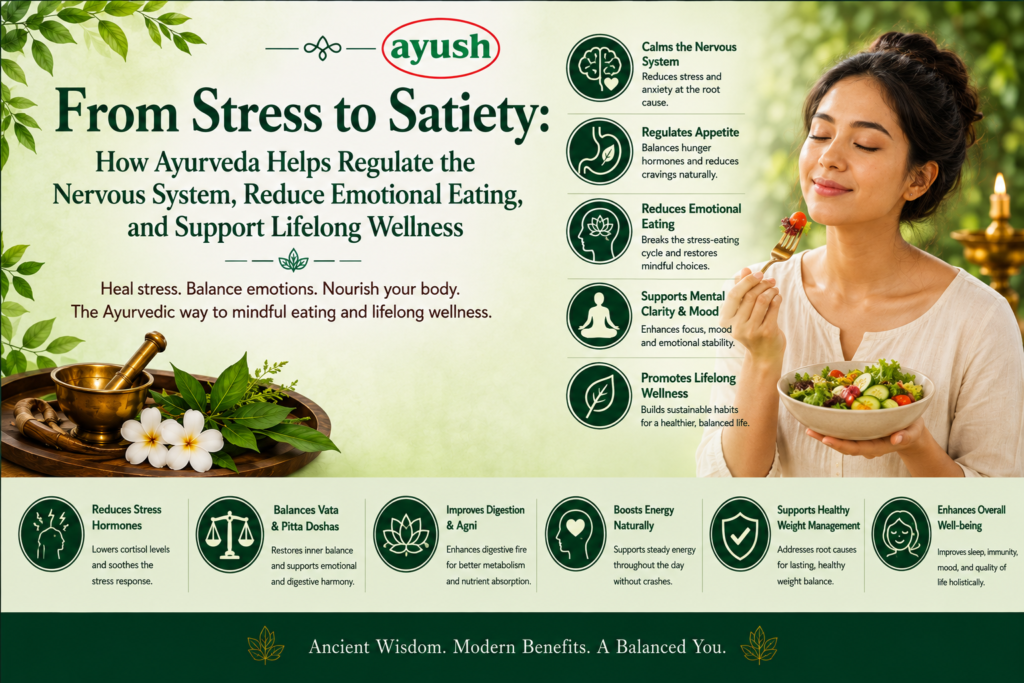
There is a hunger that has nothing to do with calories or nutritional deficit. It arrives after a difficult meeting, not after missing a meal. It reaches for sweet, salty, or crunchy foods specifically, comfort textures and flavours that activate the brain’s reward circuitry rather than addressing genuine physiological needs. Ayurvedic stress relief therapy Singapore at Ayush Ayurveda addresses this pattern with the depth it deserves, not as a willpower failure or a psychological weakness, but as a physiological consequence of sustained nervous system dysregulation that has very specific and correctable causes.
Emotional eating is one of the most common manifestations of chronic stress. Yet most interventions address either the eating behaviour or the stress in isolation. Genuine resolution requires addressing the nervous system state that generates both simultaneously.
How Chronic Stress Rewires Eating Behaviour
The connection between stress and eating behaviour operates through neurobiological pathways that are well-documented and largely outside conscious control. Ayurvedic stress relief therapy Singapore practitioners explain this biology to clients because understanding the mechanism removes the shame and self-blame that many emotional eaters carry unnecessarily.
Elevated cortisol levels over time (chronic stress) directly drive appetite with the activation of neuropeptide Y, a powerful hunger hormone that is localized in the hypothalamus. At the same time cortisol decreases the body’s leptin sensitivity, which is the satiety hormone that lets the body know if it is well-fed. The result is an imbalance in neurobiology, in which both the signals for appetite are heightened, while the signals for satiety are decreased, a state that makes over-eating not only likely, but physiologically unavoidable.
The preference for high-reward foods (sweet, fatty and salty) that elicits the release of dopamine also restores the suppressed reward signalling, and is driven by dopamine depletion that occurs during chronic stress. Singapore Ayurvedic therapies, which treat the underlying stress physiology, take a different approach to this issue than the willpower-based dietary restriction, which merely aims at overcoming it at the surface level.
The Ayurvedic Perspective on Stress-Driven Appetite Disruption
Ayurvedic stress relief therapy Singapore understands stress-driven eating disruption through the lens of Prana Vata and Vyana Vata disturbance, two Vata subdoshas whose combined dysregulation creates the nervous system hyperactivation and circulatory imbalance that underlie both chronic stress and its appetite consequences.
Prana Vata controls our sensory reception, thought processing and the nervous system’s “floor” functioning. It is in a chronic state of hypervigilance when it is disturbed, and so is unable to enter a true relaxation state between the stressful periods. It’s difficult for the body to tell the difference between real threat and regular stress. A stress response happens to every situation which is slightly challenging, and is triggered by the situation’s actual demands.
Vyana Vata controls circulation, and the distribution of nutrients and energy throughout the tissues. The disturbance of this system causes the associated unequal distribution of energy which is reflected in mid-afternoon crashes; the exact time when emotional eating is most likely to happen in stressed individuals. Ayurvedic treatments in Singapore treatments that treat Vyana Vata bring back the even and smooth circulation of energy and make these crash and crave cycles disappear, instead of working around them with snacking.
Therapeutic Interventions That Recalibrate the Stress-Eating Connection
Ayurvedic stress relief therapy Singapore treatment programmes at Ayush Ayurveda address the stress-emotional eating connection through external therapies that directly influence the nervous system state generating the problematic eating behaviour. This approach differs fundamentally from nutritional counselling that addresses only the eating dimension without touching the nervous system reality driving it.
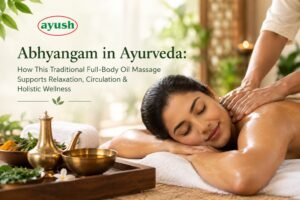
Abhyanga, full-body warm oil massage using medicated preparations, activates the parasympathetic nervous system through sustained skin contact that stimulates the vagus nerve’s calming influence. The vagal activation that quality Abhyanga produces reduces cortisol levels measurably in the hours following treatment, creating a neurobiological window during which the appetite dysregulation driven by cortisol excess temporarily resolves. Recipients of regular Abhyanga within a structured programme consistently report reduced urgency around food in the hours following treatment and, over an extended programme, a gradual reduction in the baseline stress reactivity that generates emotional eating impulses.
The continued oil stream over the forehead of Shirodhara creates neurological quietening before, during and after the session by stimulating the trigeminal nerve. In an Ayurvedic stress management program, the Shirodhara therapy is administered to the clients and they explain that over time they had noticed a change in their relationship with food when they received this treatment; a change in the sense that the compulsion to have a stressful food craving felt less urgent or as though it had lost some of its momentum.
Herbal Support for Nervous System and Appetite Regulation
Ayurvedic stress relief therapy Singapore herbal protocols for emotional eating address both the nervous system dysregulation and the specific neurobiological mechanisms generating appetite amplification. Single herbs with documented effects on cortisol, dopamine, and hypothalamic appetite signalling offer a more targeted approach than generic adaptogen combinations.
Among the many benefits of Ashwagandha, its excellent anti-inflammatory capabilities with regards to cortisol have a direct impact on the hormone that drives the amplification of appetite. It’s anxiolytic, which means it has a calming effect and decreases a person’s normal stress reactivity, creating less triggers for emotional eating during the day. In chronically stressed people, Ashwagandha consistently has been studied for its effects on body weight, which include decreases in food craving and how often people eat out of emotion, and the cortisol lowering effects of the herb.
Jatamansi, Nardostachys jatamansi, contributes dopaminergic modulation that addresses the reward depletion driving high-reward food seeking. Its grounding, stabilising action on the nervous system creates the emotional steadiness that reduces the gap between stress trigger and eating impulse. Ayurvedic therapies in Singapore formulations combining these herbs within an individually tailored prescription produce compound effects that neither ingredient achieves independently at equivalent impact.
Dinacharya: The Daily Structure That Prevents the Stress-Eating Cycle
Ayurvedic stress relief therapy Singapore treatment addresses the immediate neurobiological imbalance. Dinacharya, the structured daily rhythm practice, prevents its re-establishment once treatment has created the corrected baseline.
Meal timing within the Dinacharya framework specifically addresses the energy distribution pattern that creates emotional eating vulnerability. The Ayurvedic principle of making lunch the largest meal, consumed during the peak Pitta period between 12pm and 2pm when digestive capacity is strongest, ensures that blood glucose stability is maintained across the afternoon hours when emotional eating most commonly occurs. A well-fuelled afternoon body simply experiences fewer cravings than one running on a light lunch and falling blood glucose.
Evening meal timing, consumed early enough to allow adequate digestion before sleep, prevents the overnight digestive burden that compromises next-day energy and creates the morning stress reactivity that initiates the following day’s cravings cycle. Ayurvedic therapies in Singapore lifestyle guidance at Ayush Ayurveda treats these timing recommendations not as dietary rules but as physiological adjustments that change the internal environment within which stress and appetite interact.
Ayurvedic consultant Ajesh M. BAMS earned his Bachelor Degree in Ayurveda Medicine and Surgery from Karnataka Ayurveda Medical College under Rajiv Gandhi University of Medical Science, Bangalore, Karnataka in 2011. He served in various Ayurvedic institutions in Kerala as an Ayurvedic Physician and has over 8 years of experience in Keraleeya Panchakarma Chikitsa.
allooparambil Joshy Lijo has a Diploma in Ayurveda Nursing & Panchakarma Therapy from Kuttielavil Ayurvedic Centre and Institute, Kottayam, Kerala (2006-2007). He has an experience of 12 years in Ayurveda Panchakarma therapies. He is well-trained in Kalari Marma Therapy by Unnikrishnan Gurukkal, Anjaneya Kalari, Kottayam.
Anushiya graduated with a Bachelor of Ayurvedic Medicine and Surgery (BAMS) from Ayurveda College Coimbatore, India in 2007. She underwent an intensive training and clinical practice under the mentorship and guidance of her guru ayurvedic consultant L Mahadevan Iyer, who is a highly acclaimed physician, a great Sanskrit and Vedic scholar.
She has been practicing as Asst Medical officer and subsequently, Senior Medical officer in India. Currently she is been associated with Ayush Singapore since Jan 2019. Having specialized with In-Patients & Out-patients treatment with Ayurvedic methodologies & Medicine, she will be able to ensure that you are diagnosed and treated with utmost professionalism.
With almost decade of experience in diagnosing and healing in various medical conditions using pure natural Ayurvedic methods. She is highly skilled in Detoxification and Rejuvenation Therapy. she has a lot of passion and dedication to this profession.
Her interest towards Research Fields such as Panchakarma application according to different place, Ayurvedic awareness in the world and different modalities in disease are some of the highlight.
Issac Sunithamma has a Diploma in Ayurveda Nursing and Panchakarma Therapy from Srikrishna Ayurveda Institute, Alappuzha, Kerala (2007-2008). She has over 11 years’ experience in Ayurveda Panchakarma therapies. Her record includes working as Senior Therapist, Ayur Cure Ayurveda Hospital, Hyderabad (5 years); Senior Therapist, Samkkya Ishak Integrated Center, Malacca, Malaysia (2012-2013). She is currently a therapist at Ayush Ayurvedic Center, Yishun, Singapore since 2017.
Deepesh Damodaran holds a Diploma in Ayurveda Nursing and Panchakarma Therapy (2006-2007) from Parassinikadavu Ayurveda Medical College Kannur, Kerala. In his extensive 12 years as a Ayurveda therapist, he has worked as Senior Therapist, Samkkya Ishak Integrated Health Center, Malacca, Malaysia (2012 – 2013) and, Senior Therapist at the Ayurveda health club owned by Nimr Al- Gharbia Trade & Cont. Co. L.L.C, Salalah, Sultanate of Oman (2009 – 2011). Deepesh Damodaran is currently an integral part of Ayush Ayurvedic Center, Yishun, Singpore since 2017.
Ayurvedic consultant ARCHANA T.P,BAMS,MD(AYU),is having 9 years of experince in Ayurvedic Consultation since 2011. She secured Bachelor in Ayurvedic Medicine and Surgery (Ayurvedacharya) in 2011 from JSS Ayurveda Medical college, mysore,karnataka Thereafter she completed her Post Graduate (MD in Ayurveda – kayachikitsa) from Sri Kalabhairaveswara Ayurveda Medical College and Research Centre Bangalore, karnataka in 2015. She served as junior consultant at Poornayu Ayurveda Nikethanam , Meenangaadi, kerala,india in 2012-2013. NOW she was working as an Ayurvedic consultant at Ayush Ayurveda Pte Ltd, Yishun
Ayurvedic consultant. Sudev C. BAMS, MD(Ay) is an Ayurvedic consultant with a rich consulting experience of 10 years. He secured Bachelor in Ayurvedic Medicine and Surgery (Ayurvedacharya) in 2009 from ALN Rao Memorial Ayurveda Medical College (Rajiv Gandhi University of Health Sciences, Bangalore, Karnataka). Thereafter, he completed post-graduation in Ayurveda Vachaspati from the same college. His MD was in the subject of "Kayachikitsa". Ayurvedic consultant Sudev has presented papers in various National and International seminars. He trained under Ayurvedic consultant PMS Raveendranath (Disciple of Brahmashree Vaidyamadham Valiya Narayanan Namboothiri) in Poonthottam Ayurvedashram, Kerala for hands-on treatment and Keraleeya Panchakarma Chikitsa. He served in various Ayurvedic hospitals as Chief Consultant. Previously he was working as an Ayurvedic Physician in Ayush Ayurvedic Sdn Bhd, Johor Bahru, Malaysia.
She studied Panchakarma Ayurveda Course at Centre for Indian Medicine in 2011 and secured Diploma in Ayurveda Nursing & Panchakarma Therapy from Bharat Sevak Samaj Government of India in 2013. She is having an experience of 8 years in Ayurveda Panchakarma Therapies in India and in Malaysia. She joined Ayush on 2019.
He secured Certificate in Spa Services from Singapore Workfoce Skills Qualificatios at Spatec Academy in 2015.He is having an experience of 18 years in Ayurveda Panchakarma Therapies in Singapore and Malaysia. He also secured Diploma in Medicina Herbalism from Royal Institute of Health Sciences Mumbai in 2000, Diploma in Ayurveda Panchakarma Therapies at Prasanthy Institute of Ayurvedic studies in 2000. Joined Ayush on 2015
Ayurvedic consultant Ram Prasad graduated with a degree in Ayurvedic Medicine and Surgery (BAMS) from Bharatiyar University, Tamil Nadu, India in 1990. Meanwhile he undertook private study of ancient treatises with V.V Vasudevan, Director Arsha Yoga Vidya Peetham, Coimbatore from 1986 till 1989, besides clinical study with Vaidyamadham Cheriya Narayanan Naboodiri, the esteemed Ayurveda Master, from 1990 till 1991. In 2005 he completed a Certificate in Advanced Clinical Hypnotherapy with the Academy of Applied Hypnosis, Sydney. He is currently pursuing a course on Mind-Body medicine – Mind-Body Psychology with Greg Neville.
Ayurvedic consultant Raveendranath graduated from Ayurveda College Coimbatore with a Bachelor in Ayurvedic Medicine and Surgery (BAMS) in 1988. In 1989 he founded Poonthottam Ayurvedasram. He was initiated into Ayurveda by his father who is a renowned Sanskrit scholar belonging to a family of ardent believers of Ayurveda. To know more about ayurvedic consultant Raveendranath and Poonthottam
Ayurvedic consultant Ramesh R Varier graduated in the first rank from Madras University with a degree in Ayurvedic Medicine and Surgery (BAMS) In 1985. After a brief stint as tutor at Ayurveda College Coimbatore, he joined AVN the family owned Ayurvedic institution. To know more about Ayurvedic consultant Varier and AVN click here